Why Chlorine Is Used in Swimming Pools
Chlorine disinfects pool water, breaks down swimmer waste and prevents algae. Learn how it works and why Dubai pools need careful testing.
Chlorine is the workhorse that keeps pool water safe to swim in. Without it, water quickly fills with bacteria, algae, and the germs that swimmers carry in. Understanding why chlorine is used in swimming pool water, and how it actually cleans, helps you dose it correctly and swim in water that is genuinely clean rather than just clear. This guide explains what chlorine does, the difference between free and combined chlorine, the types available, and how Dubai's sun changes the picture.
Why Chlorine Is Used in Swimming Pools
Chlorine is used in swimming pools because it kills bacteria and viruses, destroys organic waste, and stops algae from growing. It is the most effective and affordable sanitiser available, working continuously in the water to keep it safe long after you add it.
Chlorine does three jobs at once:
- Disinfects. It kills harmful bacteria and viruses that cause ear, skin, and stomach infections.
- Oxidises waste. It breaks down sweat, oils, sunscreen, and other organic matter swimmers leave behind.
- Prevents algae. A steady chlorine level stops algae taking hold and turning the water green.
That combination is the main reason why chlorine is used in swimming pool care worldwide, from home pools to public facilities.
How Chlorine Cleans Pool Water
When chlorine is added to water, it forms hypochlorous acid, the active form that does the cleaning. This acid attacks the cell walls of bacteria and algae and neutralises germs within seconds to minutes, then keeps working as long as a residual level stays in the water.
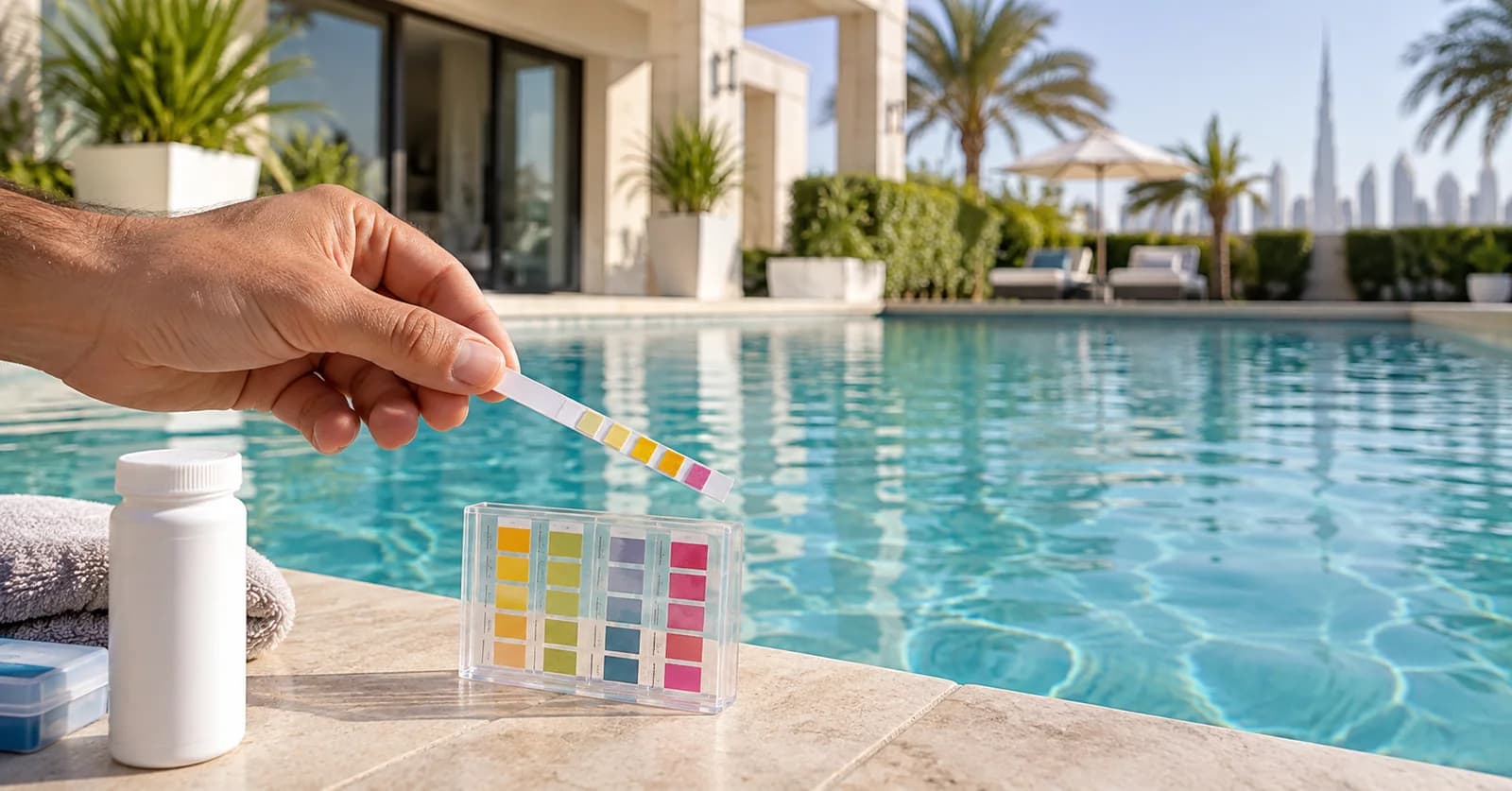
The chlorine still available to sanitise is called free chlorine, and keeping it between 1 and 3 ppm is what keeps a pool safe. Chlorine also oxidises the invisible waste that swimmers bring in, which is why a busy pool uses far more of it than a quiet one.
Free vs Combined Chlorine (Why Pools Smell)
A strong chlorine smell means too little chlorine, not too much. That surprises most people. The smell comes from combined chlorine, also called chloramines, which forms when chlorine bonds with sweat, urine, and other waste. Chloramines are weak sanitisers and cause the red eyes and sharp odour people blame on chlorine.
Free chlorine is the good, available kind. Combined chlorine is the spent, smelly kind. When the smell gets strong, the fix is to shock the pool with extra chlorine to burn off the chloramines, then test and balance the water. A well-run pool barely smells of chlorine at all.
Types of Chlorine for Pools
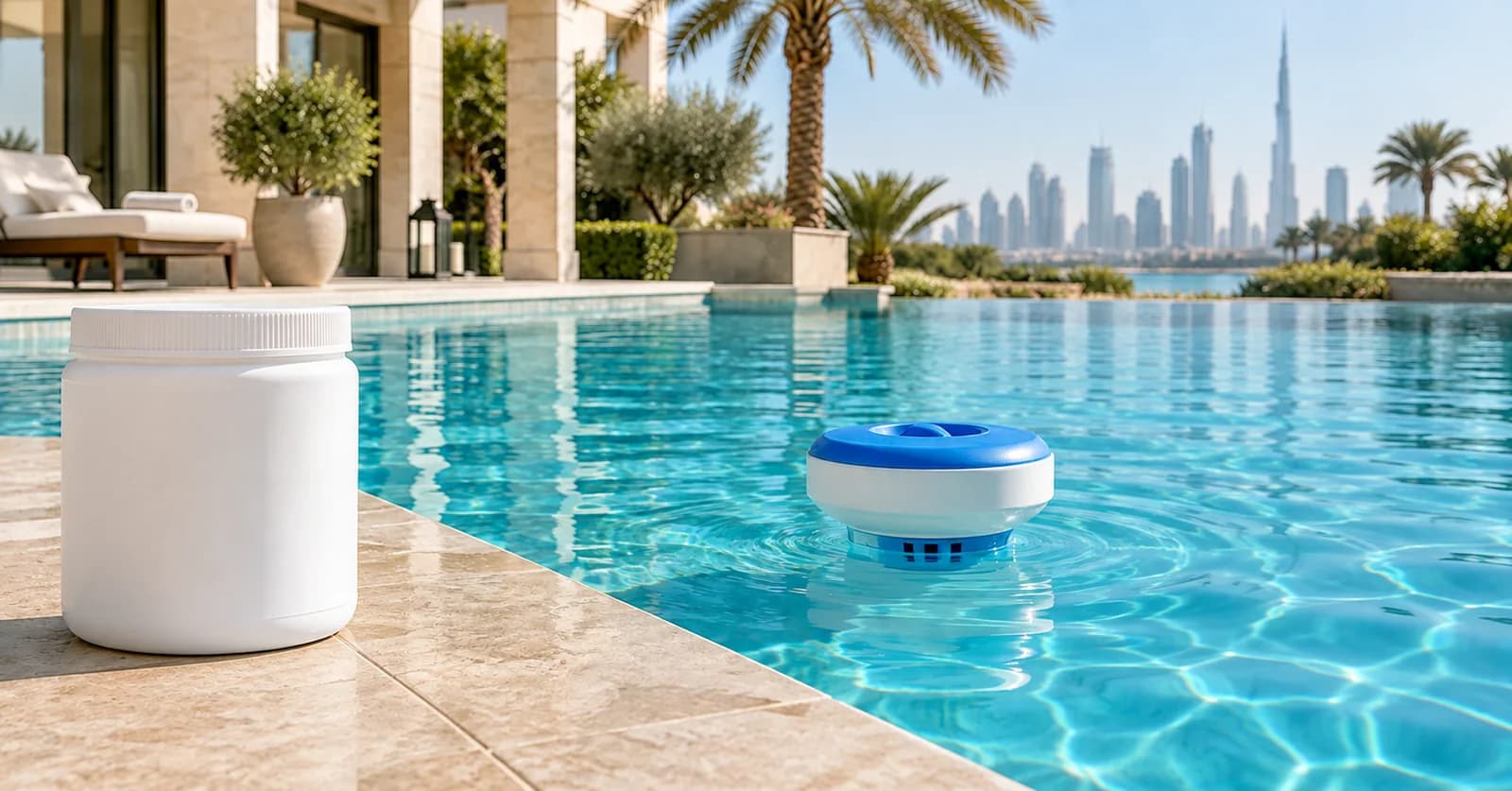
Chlorine comes in several forms, and each suits a different job. Many Dubai pools use tablets for steady day-to-day dosing and liquid or granular chlorine for shocking after heavy use.
| Type | Form | Best use |
|---|---|---|
| Liquid chlorine (sodium hypochlorite) | Liquid | Fast dosing and shocking, unstabilised |
| Chlorine tablets (trichlor) | Slow-release tablets | Steady daily dosing in a feeder or skimmer |
| Granular (cal-hypo or dichlor) | Powder | Shocking, with dichlor being stabilised |
| Salt chlorine generator | Salt system | Makes its own chlorine, low daily effort |
Whichever type you use, dose it against your pool volume before adding chlorine. A salt water pool still sanitises with chlorine; the generator simply makes it from salt.
Why Chlorine Burns Off Fast in Dubai
Dubai's sun is hard on chlorine. Ultraviolet light breaks down unstabilised chlorine within hours, so an unprotected pool can lose most of its chlorine in a single afternoon. The answer is cyanuric acid, a stabiliser that shields chlorine from UV and makes it last far longer.
Heat and heavy summer use also raise how fast chlorine is consumed. That means Dubai pools need a stabiliser level of 30 to 50 ppm and more frequent dosing than pools in cooler climates. Testing often is the only way to stay ahead of it.
Chlorine Safety and Alternatives
Handled sensibly, chlorine is safe. Store it in a cool, dry, ventilated spot, never mix different types together, and always add chemicals to water rather than water to chemicals. Keep containers sealed and away from children.
Some owners ask about alternatives. Bromine suits indoor pools and spas, salt systems still rely on chlorine, and UV or ozone systems reduce chlorine use but cannot fully replace a sanitiser residual in the water. For most Dubai pools, well-managed chlorine remains the simplest and most reliable choice. If you would rather hand it over, our team offers professional pool maintenance, and you can request a free quote.
Frequently Asked Questions
Why is chlorine used in swimming pools?
Chlorine kills bacteria and viruses, breaks down organic waste, and prevents algae. It is the most effective and affordable pool sanitiser, staying active in the water to keep it safe between treatments.
Is a chlorine pool safe to swim in?
Yes. At the recommended 1 to 3 ppm of free chlorine, a pool is safe and comfortable. Problems like red eyes come from combined chlorine and poor balance, not from correctly dosed chlorine.
Why does my pool smell strongly of chlorine?
A strong smell means combined chlorine, or chloramines, has built up because there is too little free chlorine. Shock the pool with extra chlorine to clear it, rather than adding less.
Can I use a salt pool instead of chlorine?
A salt water pool still uses chlorine. The salt generator simply makes chlorine from salt automatically, so you handle less chemical while the water is sanitised the same way.
How much chlorine should I add to my pool?
It depends on your pool volume and current reading. Aim to keep free chlorine between 1 and 3 ppm, calculate the dose against your litres, and always test after adding.