How to Test Swimming Pool Water
Learn how to test pH, free chlorine, alkalinity and the other readings that keep swimming-pool water safe, balanced and clear in Dubai.
Clear water is not luck, it is chemistry you can check in two minutes. Testing tells you whether the chlorine is working, whether the pH is safe for skin and equipment, and whether algae is about to bloom. Knowing how to test swimming pool water, and reading the results correctly, is the most useful maintenance habit a pool owner can build. This guide covers the method, the numbers to aim for, and how often to test in Dubai's climate.
How to Test Swimming Pool Water Step by Step
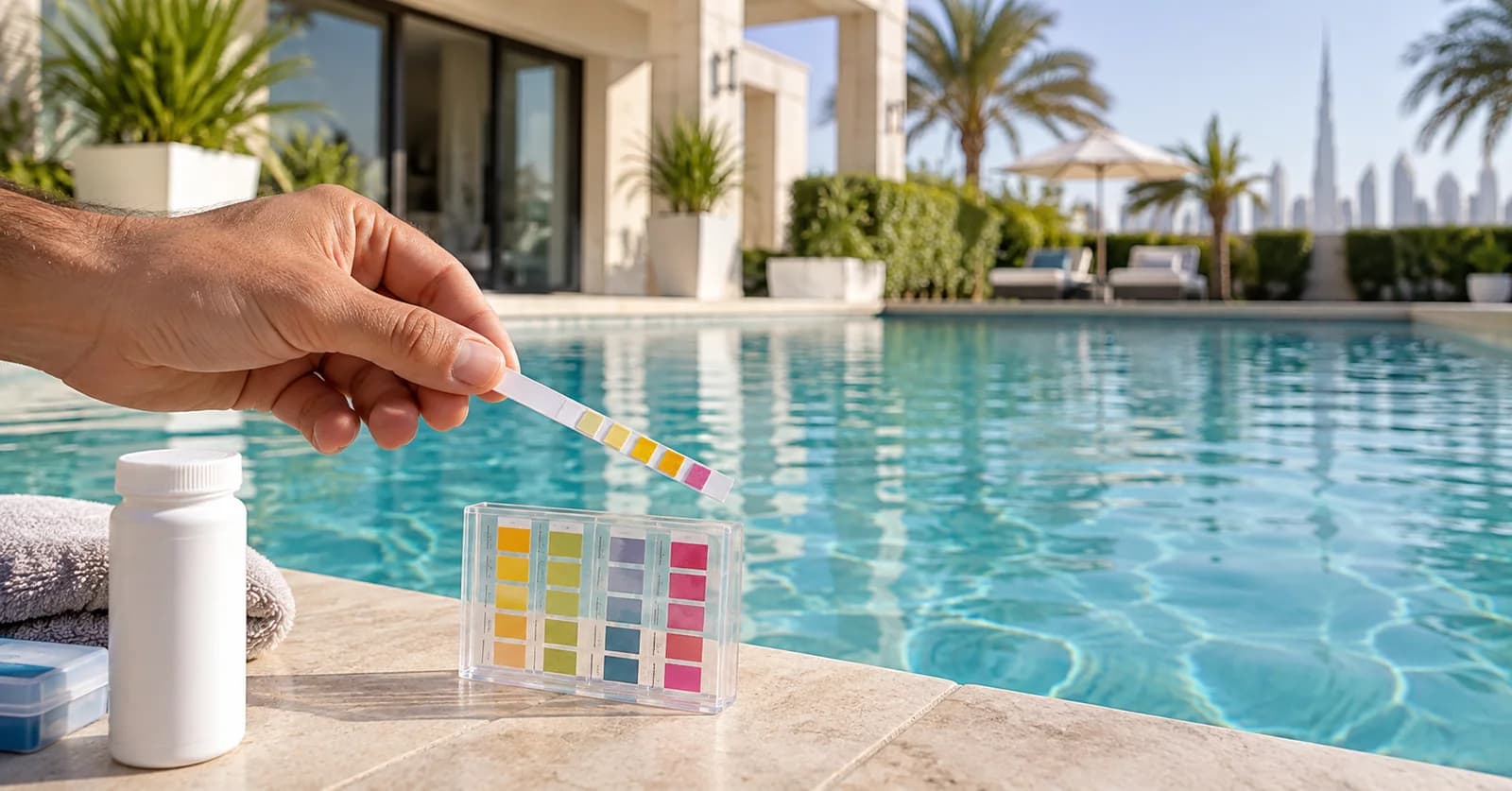
To test swimming pool water, collect a sample from elbow depth away from the return jets, dip a test strip or fill a kit vial, compare the colours to the chart, and read your pH, chlorine, and alkalinity. The whole check takes about two minutes.
Follow this order:
- Take the sample deep. Reach down to elbow depth, away from the jets and skimmer, where the water is most representative.
- Use a fresh strip or kit. Follow the timing on the pack exactly, since colours shift if you read them too early or late.
- Read in good light. Compare against the chart in daylight, not under a coloured umbrella or at dusk.
- Note the key three first. Check pH, free chlorine, and total alkalinity, then the rest.
- Adjust and retest. Make small corrections, run the pump, and test again before adding more.
Once you know how to test swimming pool water properly, you can catch a problem days before it turns the water green.
What to Test For and Ideal Ranges
Five readings tell you almost everything about your water. The most important are pH and free chlorine, since they decide whether the water is safe and whether the chlorine can do its job. The others protect your surfaces and keep the chlorine from burning off.
| Parameter | Ideal range | Why it matters |
|---|---|---|
| pH | 7.2 to 7.6 | Comfort, and lets chlorine work |
| Free chlorine | 1 to 3 ppm | The active sanitiser in the water |
| Total alkalinity | 80 to 120 ppm | Buffers pH and stops it swinging |
| Calcium hardness | 200 to 400 ppm | Protects plaster, tiles, and metal |
| Cyanuric acid (stabiliser) | 30 to 50 ppm | Shields chlorine from the sun |
A pH above 7.8 makes chlorine sluggish, while a free chlorine reading under 1 ppm leaves the water open to bacteria and algae.
Testing Methods: Strips, Kits, and Digital
There are three common ways to run pool water testing, and they trade speed for precision. Most home owners use a mix: strips for the quick daily glance, and a liquid kit or digital tester when a reading looks off.
- Test strips. Cheap and fast. Dip, wait, and match the colours. Fine for routine checks, though less precise on chlorine.
- Liquid reagent kits. You add drops to a water sample and count colour changes. More accurate, especially for pH and chlorine.
- Digital testers and photometers. The most precise option, giving a number rather than a colour. Worth it for larger or heavily used pools.
How Often to Test Your Pool Water in Dubai
Dubai pools need testing more often than the standard advice suggests. Strong sun burns off chlorine within hours, high summer temperatures speed up everything chemical, and dust plus heavy swimmer use raise demand. A weekly test is not enough in July.
A realistic schedule for a Dubai villa pool:
- pH and chlorine: two to three times a week, or daily in peak summer and after heavy use.
- Full panel (all five readings): once a week.
- Stabiliser and calcium hardness: monthly, since these move slowly.
What to Do After Testing
Testing only helps if you act on it, and the order of adjustment matters. Correct total alkalinity first, because it buffers pH. Then bring pH into range, and only then adjust chlorine. Making changes in that order stops you chasing your own tail.
Doses are always calculated against your water volume, so it helps to know how much water your pool holds before adding anything. Balanced water and a filter that keeps the water clear work together. If your readings stay stubbornly off week after week, our team offers professional pool maintenance across Dubai, and you can book a service any time.
Frequently Asked Questions
How often should I test my swimming pool water?
Test pH and chlorine two to three times a week, and run a full panel weekly. In Dubai's summer, test chlorine daily, since strong sun burns it off within hours.
What is the ideal pH for a swimming pool?
Aim for a pH between 7.2 and 7.6. Below that the water becomes corrosive and stings the eyes, and above it the chlorine works slowly and scale can form.
Are pool test strips accurate enough?
Test strips are accurate enough for routine checks and are quick and cheap. For precise chlorine and pH readings, or when something looks off, use a liquid reagent kit or a digital tester.
Why is my pool chlorine always low in summer?
Strong UV sunlight destroys chlorine fast. Keep your cyanuric acid stabiliser between 30 and 50 ppm to shield the chlorine, and test and top up more often in the hot months.
What order should I balance pool chemicals in?
Adjust total alkalinity first, then pH, then chlorine. Alkalinity buffers pH, so fixing it first keeps the pH stable and stops you from constantly re-correcting the water.