How to Float in a Swimming Pool
Learning to float comes down to a deep breath, a relaxed body, and trust in the water. Master the back float, front float, and common beginner fixes.
Floating is the first skill that makes water feel safe instead of scary. Once you can rest on the surface without effort, everything else in the pool gets easier. Learning how to float in a swimming pool comes down to three things: a big breath, a relaxed body, and trust that the water will hold you up. This guide covers the back float, the front float, the mistakes that make people sink, and simple ways to stay calm while you practise.
How to Float in a Swimming Pool Step by Step
To float, take a deep breath to fill your lungs, lie back with your body long and relaxed, spread your arms and legs wide, and keep your head still. Full lungs and a loose body are what keep you on the surface, so the calmer you stay, the higher you sit.
Start with these steps in the shallow end:
- Stand where you can touch the bottom, so you feel safe from the start.
- Take a slow, deep breath and hold the air in your lungs.
- Lean back gently and let your hips and legs rise toward the surface.
- Spread your arms and legs wide, like a star, to spread your weight.
- Breathe slowly with small sips of air, keeping your lungs mostly full.
The first time you feel the water take your weight, floating stops being a fight. That is the moment how to float in swimming pool practice starts to click.
How to Float on Your Back
The back float is the easiest and most restful position. Tip your head back until your ears are in the water and you are looking straight up. Push your hips and stomach toward the surface, let your arms rest out to the sides, and keep a gentle arch rather than sitting up.
Keep your lungs full by breathing in a steady rhythm, taking small breaths without emptying your chest. If your legs sink, it usually means your hips have dropped, so lift them back up and relax. A tiny sculling motion with your hands, palms moving in small figure-eights, holds you steady if you drift.
How to Do a Front Float
The front float teaches good body position for swimming. Take a breath, put your face in the water, and stretch your arms forward with your body long and flat. Let your legs rise behind you and stay loose. When you need air, press your arms down, lift your head just enough to breathe, then lower it again.
This position feels less natural at first because your face is down, so practise it in short goes near the wall. It builds the flat, streamlined shape that makes freestyle and other strokes far easier later.
Why People Sink: Common Mistakes
Most people who struggle to float are making one of a handful of fixable mistakes. None of them are about being a bad swimmer, and all of them come down to breath and tension.
The usual culprits:
- Empty lungs. Breathing out fully makes you sink. Keep your lungs mostly full and breathe in small sips.
- A tense body. Stiff, clenched muscles drop you lower in the water. Loose limbs float.
- Dropped hips. Letting your hips sag folds your body and pulls your legs down. Push your belly up.
- Lifting your head. Raising your head pushes your legs down like a seesaw. Let your head rest back.
- Panic. Fast, shallow breathing and thrashing waste air and energy. Slow everything down.
Tips to Relax and Build Confidence in the Water
Confidence in the water is built in small, calm sessions, not forced in one go. Fear makes you tense, and tension makes you sink, so the goal is to feel relaxed enough that the float happens on its own.
A few things that help:
- Start in the shallow end where you can stand up the instant you want to.
- Practise breathing first, taking slow breaths in and out before you even lie back.
- Use a pool noodle or kickboard under your back at first, then let it go once you feel steady.
- Keep sessions short and frequent. Ten calm minutes often beats an hour of struggling.
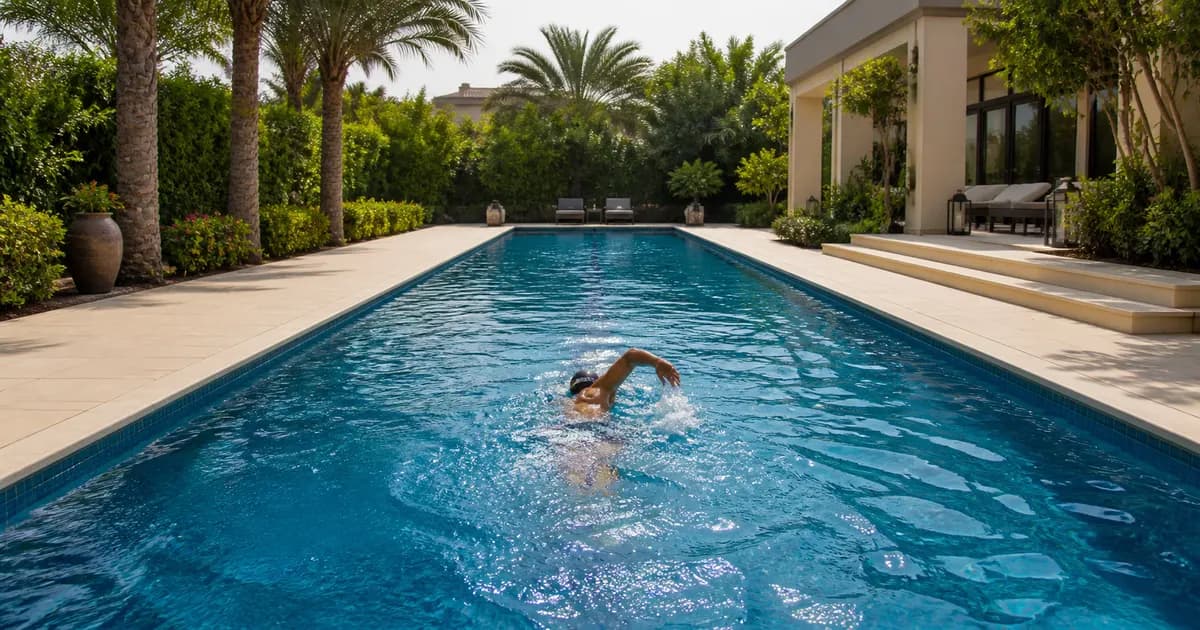
A quiet, private pool makes this far easier than a busy public one, since you can practise without waves or crowds. If you have a calm pool of your own, progress is quick. Once floating feels natural, you can build up to swimming laps and longer swims. Thinking about your own space to learn in? Start with a free quote.
Frequently Asked Questions
Why can't I float in a swimming pool?
Usually because your lungs are not full enough, your body is tense, or your hips have dropped. Keep your lungs mostly full, relax your limbs, and push your belly toward the surface.
Is it easier to float in a pool or the sea?
The sea is easier because salt water is denser and more buoyant than pool water. If you can float in a pool, you will float even more easily in the sea.
How do I float without moving or sinking?
Use the back float. Fill your lungs, tip your head back, lift your hips, and spread your arms and legs wide. A small sculling motion with your hands keeps you steady.
Can everyone learn to float?
Almost everyone can. Some denser or very muscular bodies float lower and need gentle sculling to stay up, but with full lungs and a relaxed body, nearly anyone can learn.
How long does it take to learn to float?
Many people manage a basic back float within a few short, calm sessions. Building real confidence in the water usually takes a couple of weeks of regular practice.