How to Find a Leak in a Swimming Pool
A pool that keeps dropping may be evaporating or leaking. Use the bucket test, dye test, and equipment checks to find the source before it wastes water or damages your Dubai property.
A pool that keeps dropping is either evaporating or leaking, and in Dubai's heat it can be hard to tell which. A real leak wastes water, pushes up your DEWA bill, and can undermine the deck or soil around the shell. Learning how to find a leak in a swimming pool takes a bucket, a bottle of dye, and about a day of watching the water. This guide walks through each test in order, from the simplest check to pinpointing the exact spot.
How to Find a Leak in a Swimming Pool Step by Step
To find a pool leak, first rule out evaporation with a bucket test, then dye-test the shell and fittings to locate it, and check the equipment pad for wet ground. Work from the simplest test to the most specific, and mark every spot you suspect along the way.
Follow this order:
- Rule out evaporation with the bucket test below before anything else.
- Watch where the water stops. A pool often leaks down to the level of the hole, so the waterline settling at a fitting is a strong clue.
- Dye-test the suspects, such as the skimmer, return jets, lights, and any visible cracks.
- Inspect the equipment pad and the ground over the pipes for damp or eroded soil.
- Measure the loss over 24 hours to confirm the leak and judge how fast it is going.
Knowing how to find a leak in a swimming pool early keeps a small drip from turning into a washed-out deck or a failed pipe.
The Bucket Test: Leak or Evaporation?
The bucket test tells you whether you have a real leak or just evaporation. Fill a bucket with pool water, mark the water level inside it and the pool level outside it, then leave both for 24 hours. If the pool drops more than the bucket, water is escaping somewhere.
Run it like this:
- Place a weighted bucket on the first or second step so it sits in the water.
- Fill the bucket to match the pool level, then mark both levels with tape.
- Turn the pump off and leave everything still for 24 hours, ideally with no swimming.
- Compare the two drops. Equal loss is evaporation. A bigger pool drop is a leak.
This simple pool leak detection step saves hours of chasing a leak that was never there.
The Dye Test: Pinpoint the Leak
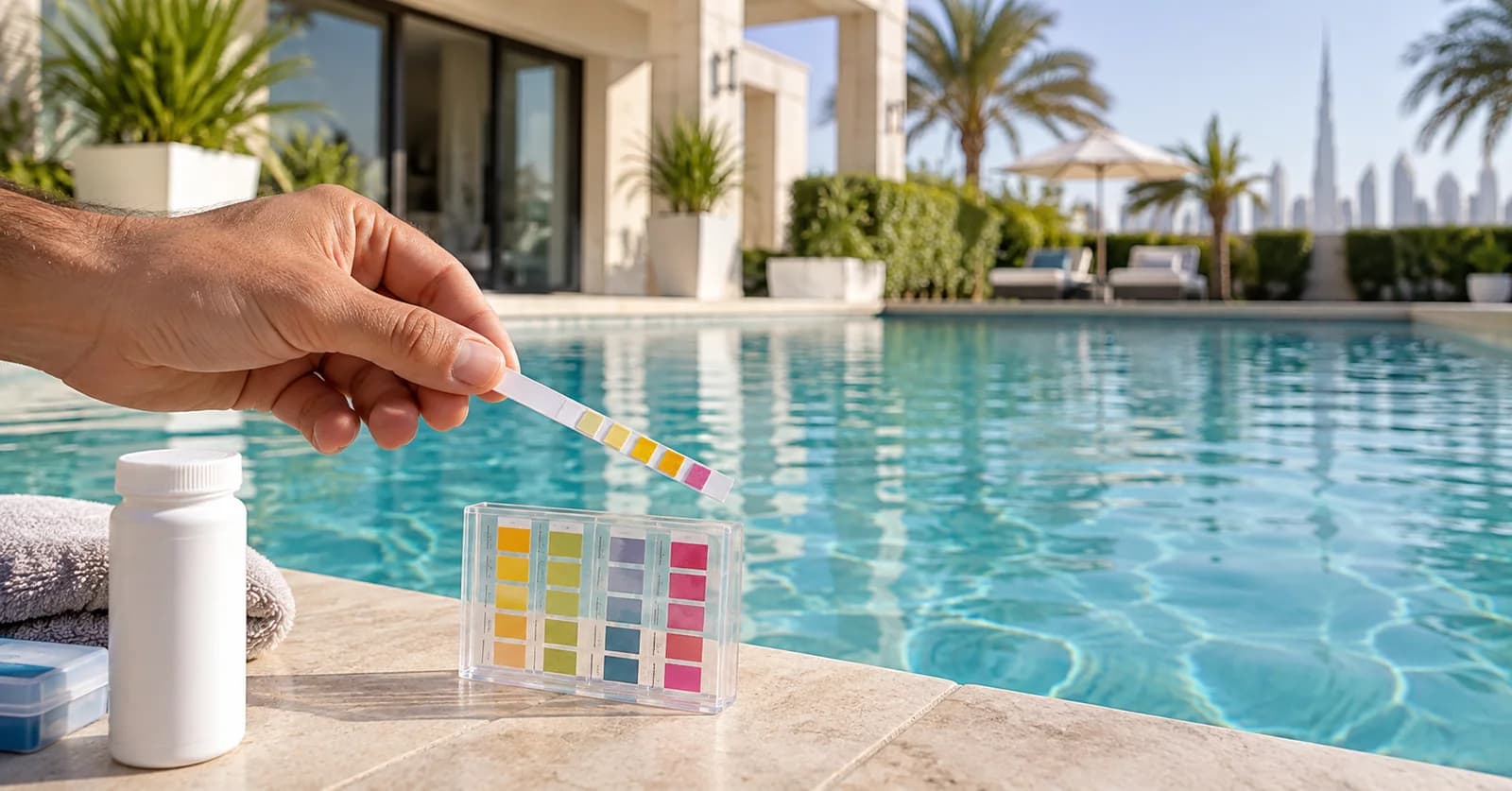
Once the bucket test confirms a leak, the dye test finds it. With the pump off and the water dead still, squeeze a little leak-finder dye or food colouring close to a suspected spot. If there is a leak, the water movement pulls the dye straight toward it.
Check these areas one at a time: the skimmer throat and its seams, around return jets and lights, along tile lines, and over any hairline crack in the plaster. Keep your own movement to a minimum so the only current is the leak itself. When the dye streams into a gap, you have found it.
Check the Equipment and Plumbing
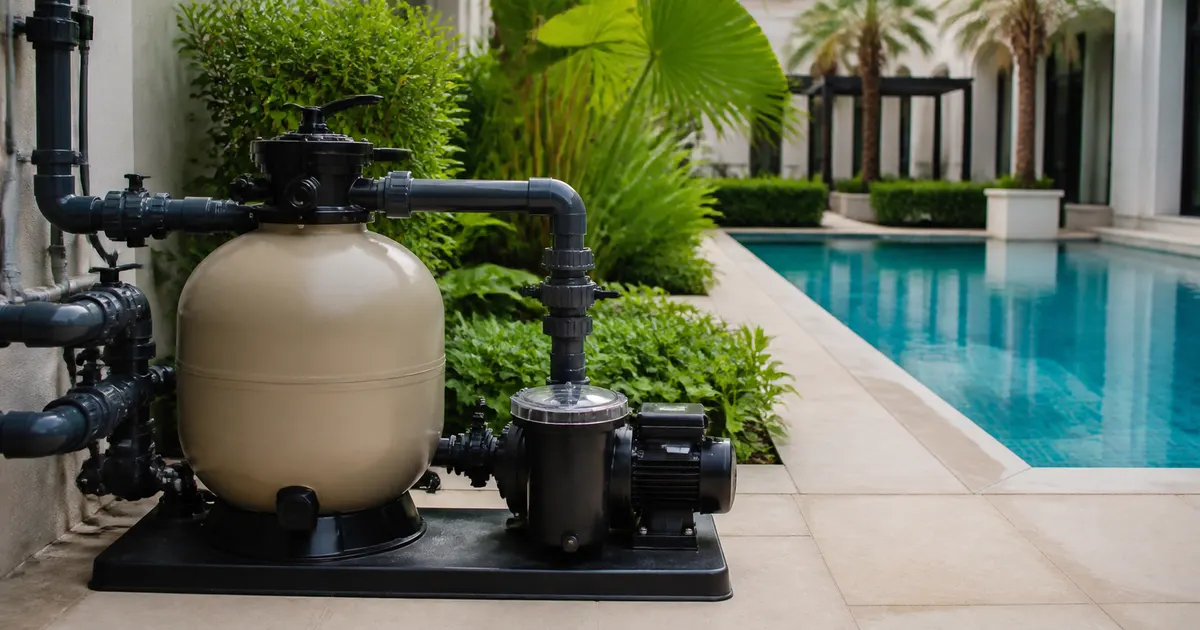
Not every leak is in the shell. A good share sit at the equipment pad, where fittings, valves, and unions loosen over time. Look for damp ground, mineral crusting, or dripping around the pump, filter, and pipework while the system runs.
The tell-tale signs at the pad:
- Wet or eroded soil over a buried pipe run, even when the surface looks dry elsewhere.
- Air bubbles from the return jets, which point to a leak on the suction side drawing air in.
- Drips or damp fittings at the pump, filter, or valve unions once the pump is running under pressure.
Signs Your Pool Is Leaking in Dubai
Dubai's climate makes leaks harder to spot, because heavy summer evaporation masks a slow leak. Still, a few signs point to water escaping rather than evaporating, and they are worth acting on quickly given the cost of wasted water.
Watch for these:
- Loss beyond normal evaporation. An open pool loses roughly 5mm a day to evaporation, more in peak summer. Consistent loss well above that, once you know how much water your pool holds, suggests a leak.
- An autofill or hose running constantly just to hold the level.
- Soggy or sinking areas in the deck, lawn, or soil next to the pool.
- Cracks, lifting tiles, or a dropping waterline that settles at one fitting.
If your top-ups are far above normal evaporation loss, treat it as a leak until a test proves otherwise.
When to Call a Leak Detection Pro
Surface leaks are a do-it-yourself job. Buried plumbing leaks are not, since they need pressure testing and acoustic listening gear to trace a pipe under concrete without digging up the whole deck. If the bucket test confirms loss but dye testing finds nothing on the shell, the leak is almost certainly underground.
At that point, a specialist saves you money by finding the exact pipe instead of guessing. Our team offers professional pool repair and maintenance across Dubai, and you can book a leak inspection if the water keeps dropping.
Frequently Asked Questions
How can I tell if my pool is leaking or just evaporating?
Run the bucket test. Float a bucket of pool water on the steps, mark both levels, and wait 24 hours. If the pool drops more than the bucket, you have a leak rather than evaporation.
How much water loss is normal for a pool?
An open pool loses around 5mm a day to evaporation, more during Dubai's summer. Losing 2.5cm or more a day, or needing constant top-ups, usually points to a leak.
Where do swimming pools leak most often?
The most common spots are the skimmer, return jets, pool lights, tile lines, and the underground plumbing. The equipment pad fittings and unions are also frequent culprits.
Can I find a pool leak myself?
Yes, for surface leaks. The bucket test and dye test let you confirm and locate most shell and fitting leaks. Buried pipe leaks need a pro with pressure testing and acoustic tools.
How much does a leaking pool cost me?
A slow leak can waste thousands of litres a month, raising your DEWA bill and risking damage to the deck and surrounding soil. Finding it early keeps repair costs low.