How Does a Swimming Pool Filter Work?
A pool filter traps dirt and debris while the pump keeps water moving. Here is how the system works and how to keep it healthy in Dubai.
How Does a Swimming Pool Filter Work?
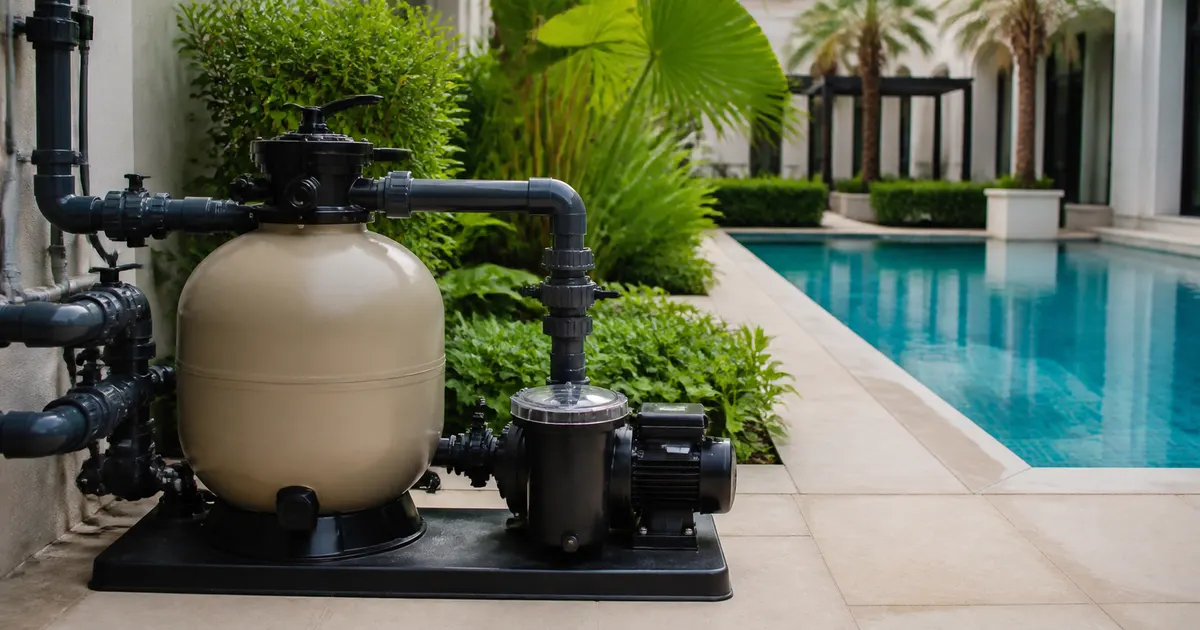
A swimming pool filter works by pulling water through a pump and forcing it across a filter medium that traps particles, then returning the cleaned water to the pool. The pool pump creates the flow, the filter catches the dirt, and the cycle repeats continuously. Nothing settles as long as water keeps moving.
The pool filtration system runs a simple loop:
- The pool pump pulls water from the pool through the skimmer and main drain.
- Water enters the filter under pressure and passes through the filter medium.
- The medium traps particles, from leaves down to fine dust.
- Clean water returns to the pool through the return jets.
- The loop repeats, cycling the whole pool volume several times a day.
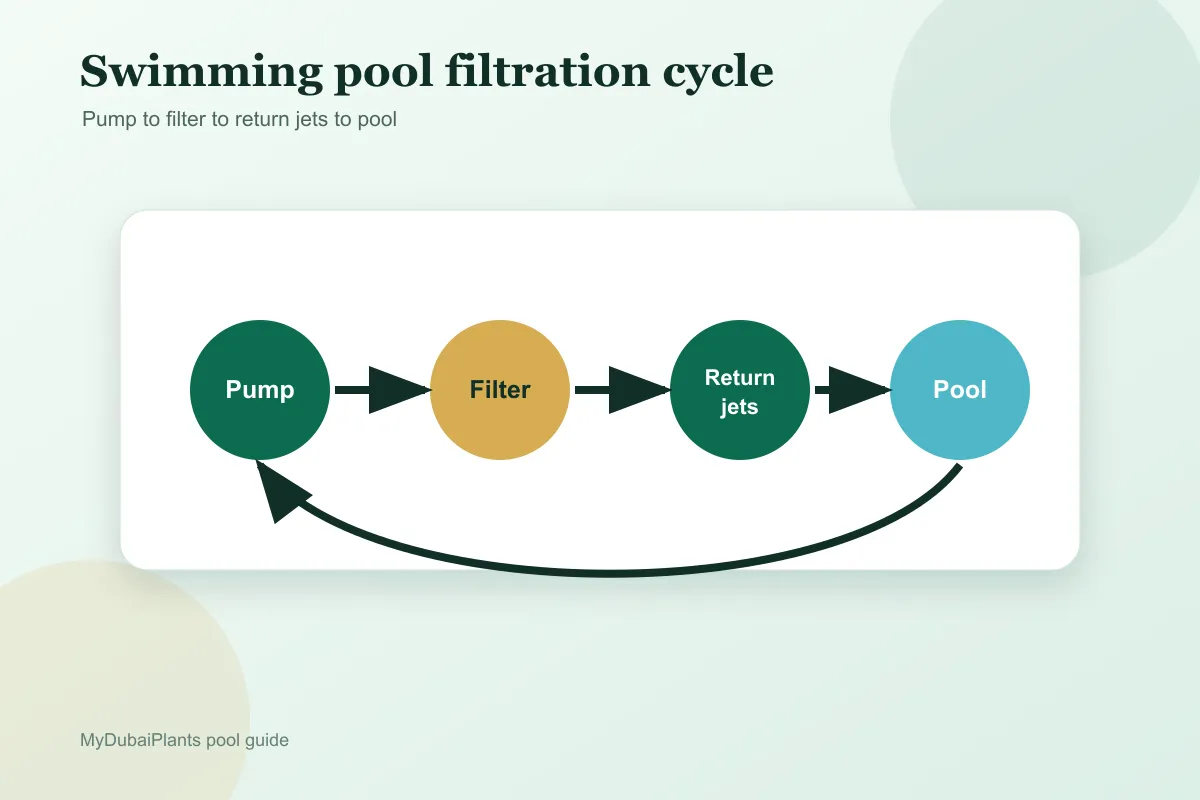
A pool needs the full volume turned over at least once, ideally twice, every 24 hours. That is why pump run time matters as much as the filter itself.
The Three Main Pool Filter Types
Pools use one of three pool filter types: sand, cartridge, or diatomaceous earth. Each traps particles differently and down to a different size. Sand is the workhorse, cartridge is low-fuss and water-saving, and the DE filter catches the finest of all. Your choice affects water clarity, running cost, and cleaning routine.
| Filter type | Traps particles down to | Cleaning method | Best for |
|---|---|---|---|
| Sand filter | ~20 microns | Backwashing | Large pools, low maintenance |
| Cartridge filter | ~10 microns | Rinse or replace element | Water saving, finer clarity |
| DE filter | ~2 microns | Backwash and recharge | Sharpest water, more upkeep |
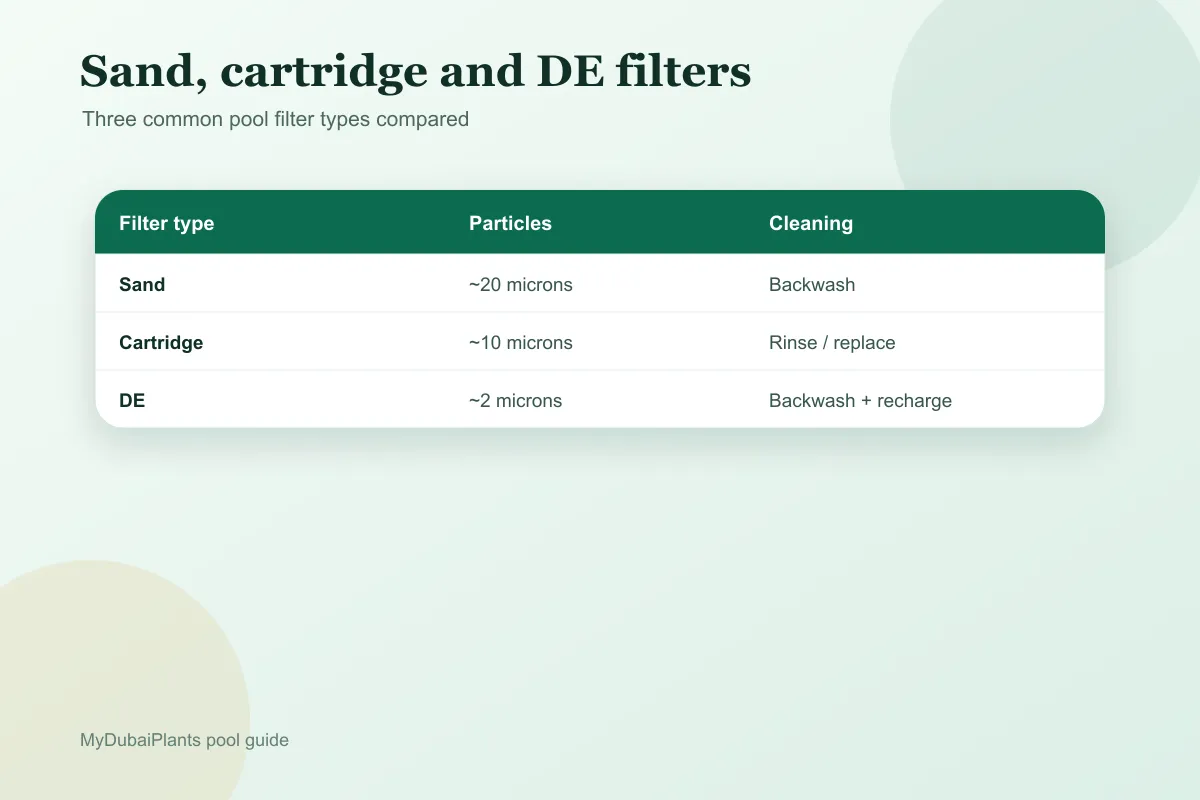
A sand filter is the most common choice for Dubai villa pools. A cartridge filter appeals where water conservation matters, since it needs no backwashing.
What a Pool Filter Removes
A swimming pool filter removes the physical dirt in the water: leaves, insects, hair, dust, sand, pollen, and fine suspended particles that cloud the surface. It does not kill bacteria or algae. That job belongs to chlorine or another sanitiser. Filtration and sanitising work as a pair, and skipping either one leaves the water unsafe or unclear.
What the filter catches:
- Leaves, twigs, and insects pulled in through the skimmer.
- Windblown dust and fine desert sand.
- Body oils, sunscreen residue, and hair.
- Suspended particles that make water look hazy.
- Dead algae after a chlorine treatment clears a bloom.
What the filter cannot do is disinfect. Bacteria, viruses, and living algae pass straight through the medium, which is why chemical sanitising sits alongside filtration rather than replacing it.
Signs Your Pool Filter Needs Cleaning
The pressure gauge climbs. As the filter traps dirt, resistance rises. A reading 8 to 10 psi above the clean baseline is the standard cue to clean or backwash.
The water turns cloudy. When flow drops, particles stay suspended instead of being pulled out. Hazy water is often a filter problem, not a chemical one.
The return jets weaken. Feeble flow from the returns means the filter is clogged and the pump is straining against it.
Debris keeps circulating. If leaves and dust reappear soon after skimming, the medium is full and letting particles slip back through.
Left unattended, a clogged filter overworks the pump, spikes electricity use, and eventually fails. Cleaning on schedule protects both the water and the equipment.
How to Keep a Pool Filter Working in Dubai
Dubai pools face a heavier dirt load than most. Fine desert dust and sand blow across open water constantly, and long summer run times push equipment hard. A pool filtration system here needs more frequent attention than the manufacturer's default schedule suggests, especially after a shamal or dust storm.
Practical habits that keep the filter healthy:
- Run the pump longer in summer. Higher temperatures and more swimmers mean more turnover is needed to hold clarity.
- Backwash or rinse on the gauge, not the calendar. Let the pressure reading tell you when, since dust load varies week to week.
- Cut the debris at the source. A well-planned garden layout with windbreak planting and screening reduces how much dust and sand reaches the water in the first place.
Landscaping does more than look good around a pool. The right layout of shrubs, hedging, and screening acts as a barrier against blown debris, easing the load on your filter. Our team designs poolside planting and screening that keeps the surrounding area green while helping the water stay clean. Planning a new pool and equipment set from scratch? See our custom pool design and build service or get a free quote.
Frequently Asked Questions
How does a swimming pool filter work with chlorine?
The filter and chlorine handle separate jobs. The filter physically removes dirt and debris, while chlorine kills bacteria and algae the filter cannot catch. Both run together to keep water clean and safe.
How long should I run my pool filter each day?
Run it long enough to turn over the full pool volume once or twice daily, usually 8 to 12 hours in summer. Dubai's heat and dust often call for the longer end of that range.
Which pool filter type is best for a Dubai villa?
Sand filters are the most popular for their low upkeep and durability in heavy dust. Cartridge filters suit owners who want finer clarity and no backwashing to save water.
Why is my pool cloudy even with the filter running?
Cloudy water usually means a clogged filter, too little run time, or a chemical imbalance. Check the pressure gauge first, backwash or rinse if it is high, then test and correct the water.
How often should I clean or backwash my pool filter?
Clean when the pressure gauge sits 8 to 10 psi above its clean baseline, not on a fixed date. In Dubai that often means more frequent backwashing during dusty and high-use months.